

Abagael Giles
/
Vermont Public
Renters — who often foot the bill for utilities — have a lot to gain from things that save money and reduce emissions like weatherization, switching to electric appliances and other upgrades. So why is it so hard to do this work in rental properties?

Abagael Giles
/
Vermont Public

New England Aquarium, taken under NOAA research permit #25739

Ronaldo Schemidt
/
AFP / Getty

Robin Lubbock / WBUR
Homes and buildings produce the second highest global warming emissions in New England, after transportation. Efforts like greener building techiques, renewable energy systems and home weatherization could help.
-
 After calling off a plan to build a biomass plant to replace its oil-burning system in 2020, the college has new ideas for how to move away from fossil fuels.
 -
 With federal money and local support, Peterborough is hoping to electrify 200 heating systems in the next three years. They’re also trying to train more people to do that work.
 -
 Gino DiGiovanni Jr., a former alderman who lost a mayoral race in Derby in November, was sentenced Wednesday for entering the U.S. Capitol building on Jan. 6, 2021, as riots broke out to stop certification of the 2020 presidential election.
 -
 The annual event at Saint Anselm College, now in its 36th year, lasted six hours and featured no shortage of rhyming couplets.
 -
 "For any American regional theater to reach 60 years is such a milestone," Artistic Director Jacob Padrón said.
 -
 Public two-year schools in Connecticut have historically attracted more diverse student bodies, but the share of diverse faculty has lagged behind.
 -
 The United States Supreme Court is hearing a case out of Oregon that may enable communities to limit the rights of homeless residents, but it likely won't impact Connecticut residents.
 -
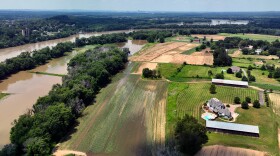 Nearly two dozen Connecticut farms and producers are getting state funds this year to brace against extreme weather conditions tied to climate change.


2024 Earth Day Series
How our New England homes can help us counter climate change.
More from the series

Watch: Conexión
How spending time outdoors inspires deeper connections with others, heritage, and nature itself
Climate & Environment


